
Friends of Change: Mentoring Boys Toward Possibility
Updated: Jul 8
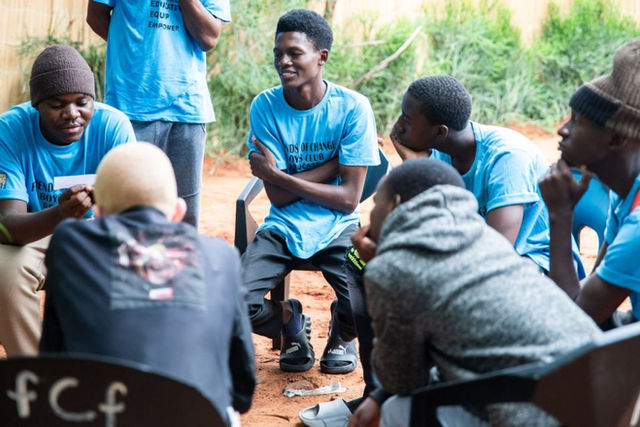
At Global Sojourns Giving Circle, we listen, learn and grow alongside the community-based organizations we support and the mentors we walk with.
Today, our commitment is clear: to holistically empower young people to reach their greatest potential and inspire their communities.
Friends of Change Boys Club in Livingstone is one expression of that commitment. Rooted in creativity and guided by mentorship, it is a space where boys are encouraged to explore who they are, imagine who they can become and build the resilience to move toward that future.
Led by Mentor Kangwa, the club uses art as a foundation for growth. Through imagination and expression, boys begin to see possibilities they may not yet have believed were available to them.
Below, Kangwa shares the story in his own words.
In Kangwa’s Words
Why We Started
Friends of Change started in 2020, though it was not called that at the time. Before GSGC began supporting boys, we were already seeing what was happening with the girls. We saw the safe space. We saw the education. We saw the changes but there was nothing for the boys.
It felt like two steps forward with the girls, and then one step backward when they returned to the community. The boys were not mentored. They were not trained. So we asked ourselves: Why not create a boys club that grows alongside the girls?
That is how Friends of Change began. It was not a reaction. It was a necessary next step.
Why Art Became the Foundation
When people ask why I chose art, they assume it is because I am an artist. But that is not the real reason.
I chose art because of what art is, and what art has done for me. Art has been my escape. It has been my voice. It has been my therapy.
I believe there is an inward ability in every person. There is no boy who is beyond hope. What we do as mentors is bring out the best in each child — the best behavior, the best hope, the best way of seeing the world.
Art is an imaginative subject. You have to see something in your mind before you bring it to life. Mentorship works in the same way. We believe in these boys when they cannot yet believe in themselves. We hear them when they cannot hear themselves.
First they must see it in their head. Once they can imagine that version of themselves, it becomes easier for that life to take shape.
Sometimes words fail. A painting can say what conversation cannot. A song can travel further than advice. A poem can reach places ordinary language does not.
I remember when we had a session about menstrual health. In our communities, that topic is often treated as taboo. At first, many boys were hesitant to speak about it. But when we invited them to respond through art, something shifted.
They created thoughtful, powerful pieces. When they explained their work, they found themselves speaking openly about the very topic they had struggled to discuss.
They were in a space they felt safe and working through a medium they trusted so the fear fell away. That is what art can do.
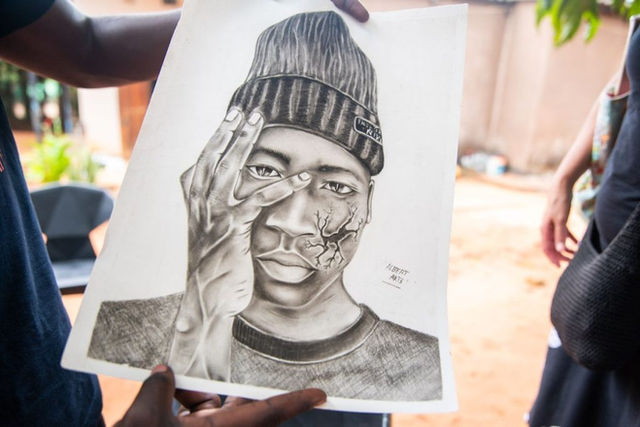
When Creativity Becomes a Lifeline
Over the years, I have seen creativity make a difference in many lives.
There is one boy in our club who is a gifted singer and craftsman. He has struggled with substance abuse and mental health challenges. His journey has included setbacks and hospital stays, but even in recovery, he returns to art.
He creates intricate wire sculptures that are sold in local craft shops. He writes songs and even includes Friends of Change in his lyrics.
Art gives him something steady to hold onto and reminds him that he is more than his struggles.
Another boy, Albert, once drew a portrait of Zambia’s Minister of Tourism. He was able to present it in person, and the minister purchased the piece.
For a young man from a humble background, moments like that matter. It is like seeing light where you did not expect it. Afterward, I noticed a shift in him. A quiet confidence and a belief that his talent could open doors he had never imagined.
Exposure changes perspective. Perspective changes direction.
Offering Another Path
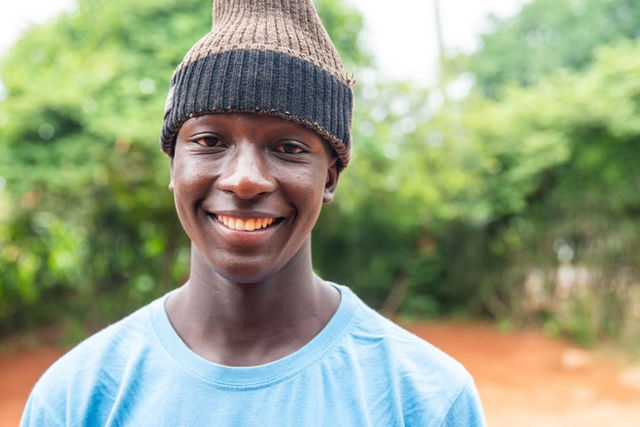
In many of our communities, young boys face financial challenges, mental health struggles and a lack of role models. And as a result, there is a pattern we see. Once they reach a certain stage, some feel like they just want to become tough and feel pressure to join society in the wrong way.
For some, that looks like abusing alcohol or drugs. For others, it means stealing, fighting or trying to prove themselves through aggression, it can begin to feel normal.
Friends of Change offers another path.
It is a safe space. Some boys have told us, “When I’m home, I don’t really have friends.” They look forward to sessions because they are meeting friends with purpose.
We expose them to positive role models, take educational trips and show them life outside what they see as normal in their community.
We offer creativity. We offer healing. We offer resilience.
There is no boy beyond hope. It simply needs nurturing.
— Mentor Kangwa
Investing in Possibility
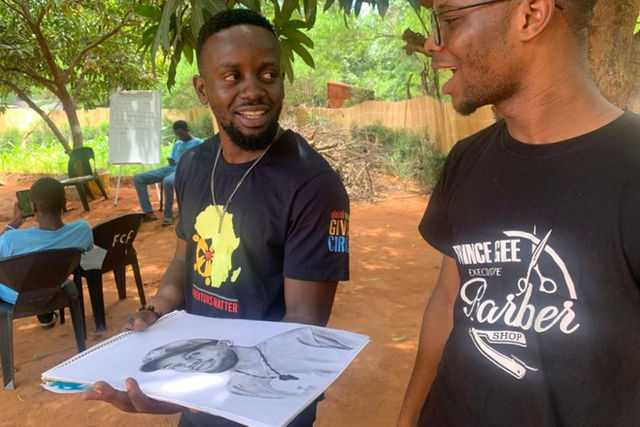
Kangwa’s reflections illustrate what Friends of Change represents within GSGC’s broader model.
This is not simply an art club. It is an investment in imagination, resilience and long-term community change.
When young people are given consistent mentorship, safe spaces and creative tools, they begin to envision futures beyond what is immediately visible. They make different choices. They step into leadership differently. They influence their communities in new ways.
Our commitment is not divided; it is integrated. Empowering young people means investing in their whole development, recognizing their inherent potential and creating environments where that potential can unfold.
To do this, we invest in community-based organizations led by mentors who live and work in the communities they serve. They understand their young people. They know how to reach them, how to engage them and how to guide them toward deeper, lasting impact.
Possibility begins in the imagination. With mentorship, it begins to take shape.
Because of the community that surrounds GSGC — mentors, partners and supporters — spaces like Friends of Change continue to grow. In those spaces, young people are discovering that their stories are not limited by circumstance, but shaped by opportunity.


