
Traveling Beyond with Miles Scherer
From rescuing lizards in Florida as a child, to turtle conservation in Madagascar, to now studying environmental policy and law, Miles Scherer's dedication to protecting wildlife is evident. It was during his work in Madagascar that he met GSGC Founder Priscilla Plummer, who introduced him to a different way of thinking about the relationship between conservation, communities, and opportunity.
It wasn't until his recent trip to Zimbabwe that her words really came to life.
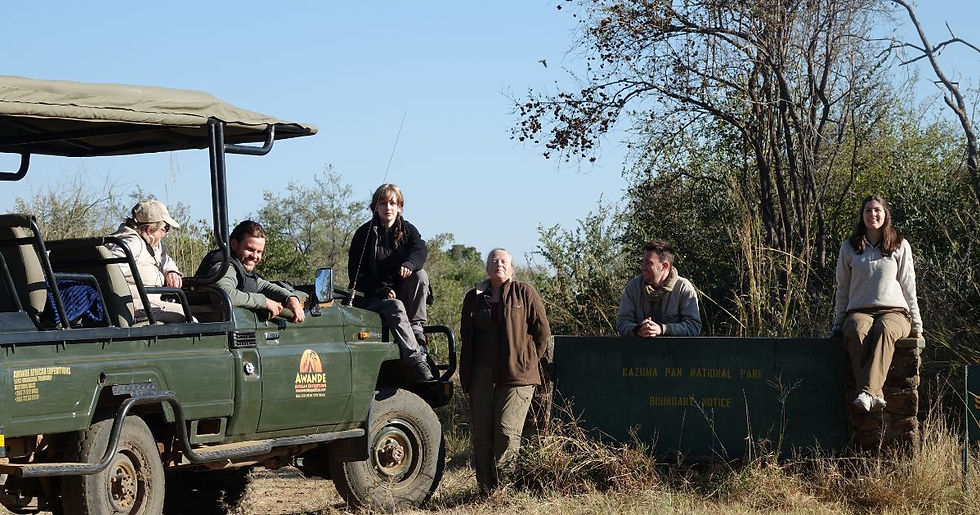
Miles embarked on a mobile safari with his 91 year old great aunt Dawn, whose love of Africa began with her first safari in the 1970s. Their shared love of wildlife and adventure brought them together for the journey, but time spent beyond the safari experience gave Miles something he had not encountered in quite the same way before. He met mentors, talked with young people about their hopes for the future, and saw how deeply community, opportunity, and conservation are connected.
For communities living alongside wildlife, conservation is not separate from everyday life. It is connected to education, livelihoods, opportunity, and the ability to imagine a future worth investing in. In Zimbabwe, Miles began to see more clearly how supporting people can also help protect the places and wildlife they call home.

A Lifelong Love for Miles
Growing up in South Florida, Miles says he was “completely in love with wildlife” from before he could speak.
“My mom likes to say that my first sentence was, ‘Mom, can I have an animal encyclopedia?’”
That fascination soon became something more tangible. As a child, Miles became known in his community as “the lizard guy,” taking in lizards and other pets that people could no longer care for. His collection eventually grew into a small menagerie before he moved the animals to a family farm, where he volunteered and helped build a rescue and educational center.
His interest in wildlife eventually led him toward environmental policy and law. Now in his final year at Syracuse University, Miles has pursued conservation through a range of experiences, from turtle conservation and government work in Madagascar to work in Congress in Washington, D.C. Each experience has deepened his interest in the relationship between conservation policy and the realities faced by people on the ground.
That perspective made his time in Zimbabwe particularly meaningful. Miles already understood the importance of protecting wildlife. What he began to see more clearly was how much conservation depends on the people who live alongside it.
Seeing the Community Behind Conservation
Miles had first learned about GSGC's mentorship model through his conversations with Priscilla. In Zimbabwe, he had the opportunity to experience the model firsthand and see the network behind it.
“What really surprised me was the vastness of the network and the collaborative spirit of it, and how tightly each of these mentors worked together to build upon one another,” he says.
Visiting Trailblazers Boys Club and Girls Time Girls Club in Victoria Falls brought that network to life. He saw mentors working together, young people supporting one another, and alumni remaining connected to the clubs long after they had graduated.
“Having people who graduate from this kind of mentorship, doing really incredible things and continuing to inspire is really, really special.”
What stood out to Miles was that the strength of the model extended well beyond an individual mentor and young person. The relationships formed through the clubs become part of a larger network that reaches into families and communities.
“This is families working together. This is community members working together. This is neighbors and sisters and daughters and brothers.”
For someone who had spent years thinking about conservation through the lens of policy and environmental protection, seeing that network in action offered another perspective on how lasting change takes root. It happens through people who know one another, invest in one another, and share a sense of what is possible.

Creating Deliberate Possibility
An afternoon with mentor Nyika Muyambo brought that idea into sharper focus.
Their conversation ranged from education and tourism to leadership and the role opportunity can play in changing the trajectory of a life. One phrase in particular stayed with Miles: “creating deliberate possibility.”
The phrase resonated because it captured something he was seeing throughout the GSGC model. Possibility does not simply appear. It can be cultivated through relationships, education, encouragement, and intentional investment in people.
Nyika's own approach to leadership offered a powerful example. When Nyika told Miles, “I'm not an employee of GSGC. We have shared values,” Miles saw a model built around shared purpose rather than position.
That distinction helped explain the strength of the network he had encountered. The people involved were not simply carrying out a program. They were connected by a shared belief in what young people and communities can accomplish when they have the relationships and opportunities to shape their own futures.
“Nyika is a great example of what a leader who's actually driving a movement forward looks like and, and how to inspire real people.”
When Opportunity Connects People and Conservation
The connection between opportunity and conservation became clearest when Miles began talking with young people about their futures.
Some were interested in careers connected to wildlife and tourism, including becoming safari guides. What struck Miles was that their interest was not necessarily rooted in the same fascination with animals that had shaped his own childhood. They were thinking about the landscape around them in terms of what it could make possible for their lives.
“Seeing kids get excited about the concept of being a guide, not necessarily because they loved animals, it was an eye opener into actually talking with the kids and hearing why they want to get into it.”
Those conversations gave Miles another way to think about conservation. For communities living alongside wildlife, protecting the natural world is closely connected to having opportunities to build a meaningful future within it.
That is where the role of mentorship became especially clear. Education, guidance, confidence, and exposure to possibility can help young people envision futures connected to their communities and their environment. Those opportunities can, in turn, create a deeper stake in protecting both.
“We have it backwards when we think about how to really confront conservation problems,” Miles says. “Conservation problems are people problems.”
For Miles, the insight was not that conservation should move away from protecting wildlife. It was that lasting conservation must account for the people whose lives are intertwined with the places and species we want to protect.
Learning to See Beyond the Wildlife
The way Miles experienced Zimbabwe also shaped what he was able to take from it.
“We took our time. We weren't rushed. Each experience was an experience. It wasn't like a checklist.”
That pace created room for conversations and relationships that might have been difficult to experience on a conventional safari. Safari guide Bulisani Mathe offered his knowledge of the bush. Nyika opened conversations about leadership, education, and possibility. Mentors and young people shared their experiences and aspirations.
And Dawn brought another way of seeing.
Having traveled to Africa since the 1970s, she carried decades of memories and a practiced eye for the small details that can disappear when attention is focused on the obvious.
“She'd point out things and stop us. ‘Oh, look at the reflection of the water.’ Or ‘Oh, look at the way that this tree is hanging.’ You were able to see things through her eyes, a reality that she made possible.”
Dawn's way of noticing the landscape complemented what Miles was learning from the people he met. She encouraged him to slow down and look more closely at the place itself, while his experiences with Nyika, the mentors, and young people encouraged him to look more closely at the people who call that place home.
Together, those perspectives expanded the way Miles experienced Zimbabwe. The landscape was no longer simply the setting for wildlife. It was a place where people, opportunity, community, and conservation are deeply connected.

Beyond the Wildlife
Miles arrived in Zimbabwe with a lifelong love of wildlife and years of experience thinking about conservation. He left with a broader understanding of what protecting wildlife can require.
It begins with people.
For communities living alongside wildlife, the opportunity to pursue an education, build a livelihood, develop confidence, and imagine a meaningful future can shape how they experience and value the places around them. Mentorship can help create those possibilities by connecting young people with people who believe in them and can help them see what comes next.
For Miles, traveling beyond the wildlife did not mean looking past the animals. It meant seeing the larger story around them, and recognizing that the future of wildlife is connected to the future of the people who share its landscape.


