
The Transformational Power of Mentorship
Updated: Jul 16
Why Global Sojourns Giving Circle’s Mentoring Model Matters
By Holley Gilbert and Suzanne Firth, GSGC Supporters
“I am unique. I matter.”
These five words seem simple. But when a young person believes them — really believes them — everything can change.
At Global Sojourns Giving Circle, helping youth get to a deep-seated self-confidence is at the heart of everything we do. Our mentorship model is not a curriculum or a checklist; it’s a relationship built on presence, consistency, listening and caring. Our model sets up the slow, steady process of transformation that happens when a trusted adult says, “I see you. I hear you. I believe in you.” And then demonstrates that belief again and again.
Mentorship: A Lifeline
Most of GSGC’s 47 youth clubs are in rural areas of Zimbabwe, Zambia and Madagascar, often close to protected wildlife habitat and safari camps. In these more isolated regions, patriarchal traditions persist, and girls in particular face immense barriers. Many girls are expected to care for siblings, do chores and marry rather than pursue education. Both girls and boys grow up in communities impacted by intergenerational poverty, fractured families and few healthy role models.
In Zimbabwe, only 14% of girls and 17% of boys complete high school (1). More than 60% of girls with only a primary school education marry before age 18 compared with just 6% of those with a secondary education (1). In Zambia, where education is now free through high school, 29% of girls still marry before age 18 (7).
Many children are reared by grandparents because parents must find work in other communities or countries. Many live without reliable access, or any access, to radio, television or the internet, let alone knowledgeable mentors or positive role models (1). Add the legacy of HIV/AIDS, food insecurity and economic instability, and it becomes clear: mentorship is a critical need.
The potential of African youth is profound, despite these challenges. GSGC taps into that potential, not through charity or handouts, but through relationships rooted in trust, compassion and mutual respect.
Mentorship, the GSGC Way
Around the world, mentorship is often described as a more experienced person guiding someone with less experience. But in the GSGC network, mentorship is far more than skills-sharing or career advice; it’s a holistic, community-driven process of empowerment.
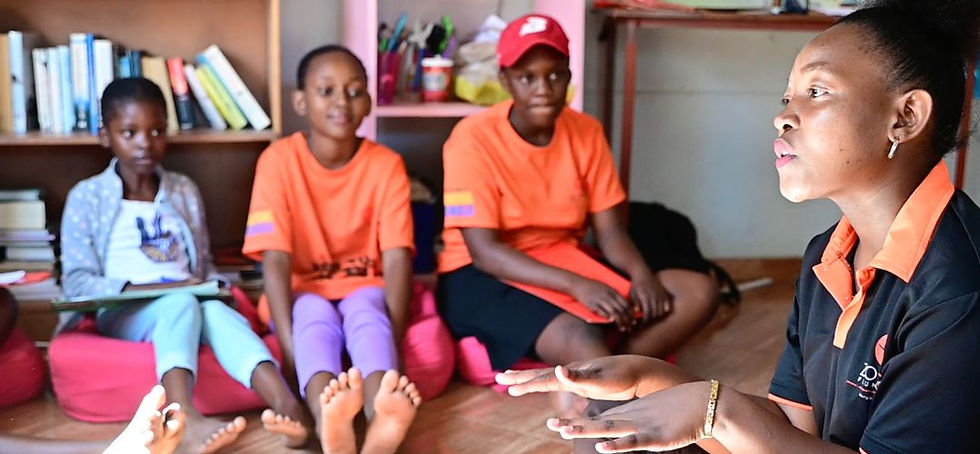
Our Mentors are local leaders, women and men who know their communities’ needs, values and traditions. Each founded a club of 15-20 youth, small enough to allow for deep personal connections.
Weekly sessions focus on life skills, hygiene, reproductive health and rights, the importance of education, leadership, gender equity and community service — all building a foundation for lives of opportunity, self-sufficiency and dignity. The trust, belief, confidence and change are nurtured in the in-between moments: the shoulder to cry on; solving a problem; the home or school visits. They all demonstrate the unwavering belief that each young person matters.
Girls Time Club Mentor Mercy Sibanda puts it simply: “Mentoring is a voice that is willing to take each step with you, guiding you into becoming the best version of yourself.”
Each Mentor is empowered to bring his or her own interests, creativity and wisdom to the work, so each club is unique. Shared values, goals and practices united them.
GSGC’s mentorship model is not imported or outsourced. It is built from the ground up by local change makers, a process that is organic, constantly evolving and continually improving. GSGC comes alongside them, supporting but not directing them. Our role is one of coaching, connection and resources.
The approach embodies the African proverb: “If you want to go fast, go alone. If you want to go far, go together.”
And it works because when young people feel seen and supported, they rise, not just for themselves, but for their families and communities.
As early club member Pinky Ncube puts it, “We always say that when one makes it, it’s like the whole community has made it.”
Meeting Youth Where They Are
The cultural history of mentorship in Africa is both ancient and sacred. As Burkinabé writer and healer Malidoma Patrice Somé explains in The Healing Wisdom of Africa, “A mentor is not a teacher… but a guide… someone who helps a young person remember what they already know.” (8)
This belief is woven into the fabric of GSGC’s approach — an approach that does not impose solutions but uncovers strength from within. Young people are not empty vessels to be filled; they are full of potential waiting to be unlocked.
Take Ratidzai Matumbura. When she first arrived at a GSGC-sponsored Girls Time Club in Victoria Falls, she was too shy to speak. The moment she was asked her to introduce herself, she froze. She didn’t come back the next week. But Mentor Procedure Chikosi noticed and went to find her. “I see so much potential in you,” she told Rati.
That simple act changed everything.
Rati returned. She began learning life skills, setting goals and discovering her voice. Her academic performance soared. She earned a scholarship to study Business Administration in India, then another from GSGC to help with expenses. In June 2024, Rati graduated with a bachelor’s degree. She now works at a GSGC alumni center, helping others reach their potential.
“It wasn’t just about practical guidance,” she says. “It was also about emotional support, knowing someone believed in me when I didn’t believe in myself.”
Mentoring’s Collective Power
In the early years, GSGC Mentors worked primarily independently, each leading a club in their community, learning as they went. Over time and with a growing sense of shared purpose, these local leaders began connecting regularly through technology, then in person, and now regularly. What has emerged is more than just a network. It is a family.
Together, they began shaping a common understanding of what makes mentorship work. Not a formula, they agreed, but a living, evolving set of guiding principles drawn from experience.
Mentors found that transformation happens in private welcoming spaces, where youth feel safe and known. Confidence grows best in intimate settings that foster meaningful relationships. Weekly meetings build consistency and trust. Sessions can begin with open check-ins and end with dancing, drawing, storytelling or games — activities that spark joy while deepening connections.
Over time, Mentors noticed that real growth came when youth were not only supported academically but invited to explore their values, their sense of purpose, their dreams and their responsibility to others. As youth gained confidence and self-awareness, they were encouraged to lead, serve and give back, sending ripples through their communities.
Raising a greater awareness of the natural world through wildlife education, community clean up events and tree plantings grounded the work with a deeper sense of place.
Mentorship Beyond the Clubs
GSGC’s work does not end when a young person finishes high school. As the club network has grown, so has the number of alumni, many of whom still need guidance and support as they navigate the paths and decisions of early adulthood.
To meet that need, GSGC launched the Youth Mentorship Centre in Victoria Falls and is supporting iThuba, the center’s alumni club that provides resources and mentorship to those pursuing university, vocational training or entrepreneurial paths. iThuba connects youth with professionals for job shadowing, assistance with writing CVs or job applications, and building networks of mutual support.
GSGC also now supports five other clubs serving approximately 60 club alumni.
Join Our Circle
At its core, GSGC is not just a nonprofit. It’s a community, a growing chosen family of people who believe in the power of mentorship to change lives and shift systems.
We invite you to be part of it.
Support youth in Southern Africa by learning more at: www.gsgivingcircle.org
Meet our Mentors and youth
Donate once or become a monthly supporter
Give stock instead of cash
Or simply share our story
Join because this work is changing the world, one young person at a time.
SOURCES 1. Zimbabwe Education Fact Sheets, MIC-EAGLE, UNICEF 2. African Youth Mentoring Network 3. Zambia Ministry of Education 4. UNICEF Economic and Social Council Data 5. World Food Programme 6. WHO/UNICEF Joint Monitoring Programme 7. Girls Not Brides 8. Somé, Malidoma Patrice. The Healing Wisdom of Africa


