
Mentor Moment: Mercy Standing Tall
Standing tall takes courage. For a young person, it can mean finding the courage to speak when she has spent months staying quiet. For a mentor, it can mean finding the courage to speak up for herself, set boundaries, and say no when she needs to.
For Mercy Sibanda, those lessons have become part of her own journey. As a mentor with Girls Time Club and Ithuba Alumni Club in Victoria Falls, she encourages young people to recognize their worth, find their voice, and develop the agency to make choices for themselves. Over the years, the work has challenged Mercy to do the same.
The Courage to Speak

Knowing the young people she mentors means Mercy pays attention not only to what they say, but also to what they don’t say. Sometimes a reluctance to participate, or simply a sense that something isn’t quite right, tells her someone may need more support.
Rather than rushing in, Mercy watches, listens, and gives them time to become comfortable. One girl’s shyness seemed to be more than simply reluctance to participate. She rarely contributed to group discussions, always chose to sit beside Mercy, and seemed to be carrying challenges beyond the club.
“I could tell that she was just going through some stuff at home. And that’s when I actually decided to have one-on-one sessions with her, just to try and find out what was happening.”
Rather than pushing her to participate, Mercy created opportunities to connect individually.
“As a mentor I’ve learned to see the importance of being a safe space to the kids that I mentor.”
For almost five months after joining the club, the girl remained quiet during group discussions. Then, one Saturday, something changed.
“For the first time since she joined the club, she stood up and she said something.”
Mercy remembers the smile on her face. After months of rarely speaking, the girl was beginning to let others hear her voice.
“I’ve changed the way she sees herself, the way she carries herself. She is now living purposefully, living, knowing that she is worth being heard, being seen.”

The Courage to Set Boundaries
The courage to speak up is a lesson Mercy has had to learn for herself, too. Through mentoring, she has become more aware of her own worth and more willing to set boundaries around what she will accept and what she can give.
“I see myself as an example of what we preach, of what we try and instill in the kids that we mentor because as I have been walking this journey with them, mentoring them to become best versions of themselves, I have managed to try and become the best version of myself as well.”
“It has enabled me to see the best in me. It has taught me to love myself because I am loving other people. There is no way you can love others when you do not have love for yourself.”
“I think the biggest change I’ve noticed is I am able to stand tall for myself. I cannot stand abuse. I cannot stand people taking advantage of me.”
But one of the hardest boundaries has been knowing that she cannot be everything to everyone.
“One challenge I have faced and I still continue to face is understanding that I cannot be there for each and every young person that I meet.”
For a mentor who cares deeply about the young people she serves, saying no can be difficult. Mercy has come to understand that protecting her own capacity is part of being able to continue showing up for others.
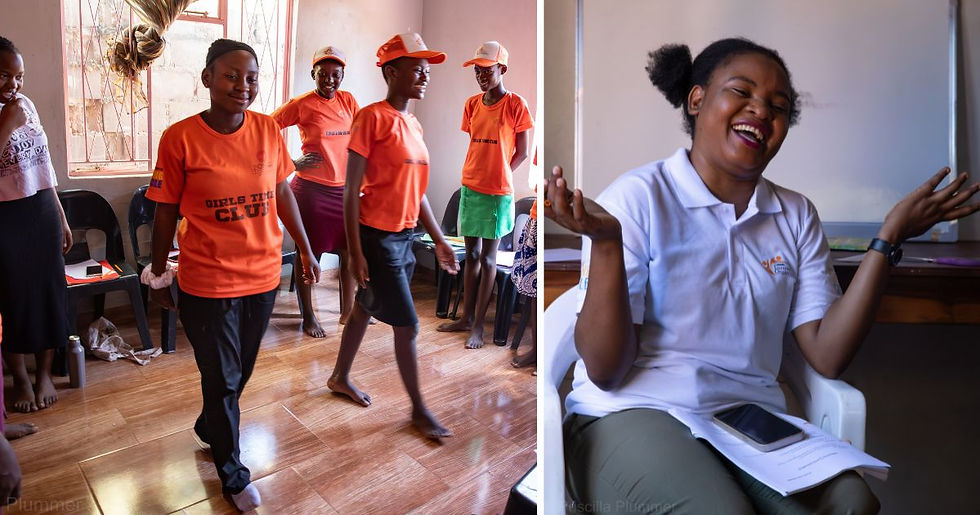
“I have learned that it is okay to say no.”
That lesson has shaped the way Mercy thinks about mentorship itself. Strong relationships need enough space for people to be seen, heard, and supported without asking one person to carry everything.
“The impact becomes great when the circle is small. You get recharged and you keep giving from a cup that is full.”
Change in the Making
When that girl finally stood up and spoke, Mercy saw what can happen when a young person is given the time, safety, and encouragement to find her own voice. It is the kind of courage Mercy has been learning in her own life, too: the courage to speak up, to set boundaries, and to know that doing so does not diminish her ability to care for others.
She hopes the young people she mentors will leave the club with that same courage: knowing their worth, trusting their voices, and feeling confident enough to shape what comes next.
“I see them becoming the change that we have been wanting for the longest time. I see them as changemakers as well.”
“I hope they carry with them that they are special and they should live their lives with so much purpose and always try to give back.”


